Two repairs for two kinds of damage
A chimney fire hurts a chimney in two places. Inside, it cracks the flue tiles or splits an old metal liner. Up top, it bakes the mortar, and a stack that was holding together out of habit can start to loosen. A new liner answers the first kind of damage. A rebuild answers the second. After a fire, plenty of chimneys in Hermosa Beach need one of the two, some need both, and a lucky few need neither.
Here we compare them the way our reports do: what each repair fixes, what the camera has to show before we recommend it, and what the written quote lists.
Start with the footage, not the repair
Neither repair should be picked before a Level 2 inspection. At $375 it is the cheapest piece of the whole job, and it is the piece that stops you paying for the wrong one. The camera shows us three things that drive the choice:
- Where the cracks sit and how they run. Hairlines across a few tiles, or open joints and missing pieces along the whole height.
- The shape and size of the flue. Some old flues are too irregular to take a liner without work at the smoke chamber first.
- The mortar and brick around the flue, seen from inside the flue and again from the roof.
Relining: sound brick, failed flue
A liner gives smoke a new sealed path inside the old chimney. After a fire it is the usual answer when:
- tiles are cracked or shifted but the brick around them is solid;
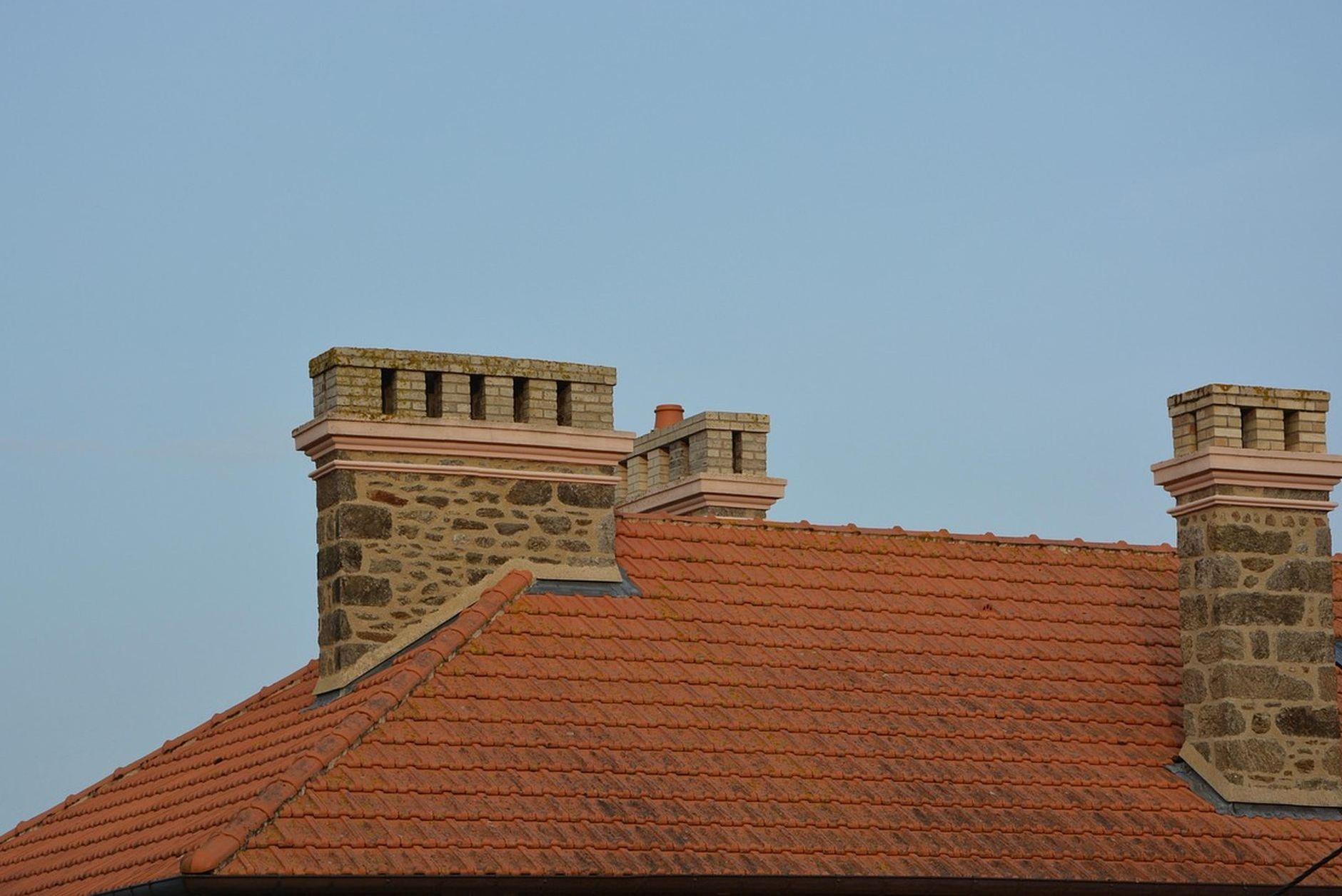
- the stack above the roof stands plumb and its mortar does not crumble under a scraper;
- the fire did not reach any framing.
Most relining after a fire uses stainless steel, sized to the appliance that will burn below it. Some chimneys sit close enough to wood that the liner needs an insulating layer to keep heat off that wood, and the quote says when yours does. Our liner installation page covers the work itself.
A liner is also the route for owners who are finished with wood. A gas insert, installed for $2,700 to $5,400, vents through a liner of its own, so on most installs a cracked clay flue stops being the path for exhaust as part of that job.
Rebuilding: masonry that has let go
A rebuild replaces brick and mortar that can no longer hold. After a fire we recommend it when:
- the stack above the roof shifts when pushed by hand;
- mortar in the upper joints has turned to sand;
- bricks are cracked right through, not just across the face;
- the crown has broken into pieces.
A partial rebuild takes down the damaged upper part and lays it back up. How far down we go is set by where the mortar turns firm again, and the quote says plainly that we stop and talk to you before going any lower than planned. A full rebuild is unusual after a fire on its own; when we recommend one, older damage was nearly always there first. Our rebuilds page has more on both.
In this part of Los Angeles County a rebuild is also the moment to plan for the next earthquake. Brick stacks fell across the region in the 1994 quake, and a chimney that is coming down anyway can go back up with steel reinforcement or a lighter top section. The seismic retrofit page sets out the options in general terms.
Side by side
| New liner | Rebuild | |
|---|---|---|
| What it fixes | A cracked or split flue | Loose, cracked or heat baked masonry |
| Camera finding behind it | Cracked tile inside sound brick | A moving stack, sandy mortar |
| Roof work | At the top only, to feed the liner and set the cap | Most of the job |
| City permit | We check with the city before quoting | We check with the city before quoting |
| Price here | Written figure after the camera | Written figure after the camera |
For more on which jobs a city wants to sign off, see our up to code repairs page.
When the answer is both
Sometimes the camera finds cracked tiles and the roof finds a loose top. Then the order is rebuild first, liner second: the liner is lowered through the new top and sealed under a fresh cap. Doing it the other way round means pulling the liner out again to rebuild around it. One quote covers both, with each part on its own line, so you can see what the liner costs and what the masonry costs.
What decides your quote
Liners and rebuilds have no published price at Durant Chimney Works, and that is deliberate. The figure swings with the height of the flue, the liner diameter, whether insulation is needed, how many courses come down, whether the old brick can be cleaned and reused, and how hard the roof is to work on. Once we have the footage, the price goes on paper for you. If you have had a fire and want to know which repair you are facing, ask for the camera visit here, and say whether you want to keep burning wood, switch to gas, or close the fireplace for good. That one answer changes the liner we quote.
What not to do in the meantime
Do not light a fire to test the draft. Do not let anyone pour or spray a sealant into the flue before the camera has been down; it hides the cracks we need to see. And if bricks have come loose from the top, keep them in a bucket rather than throwing them out, because they tell us a lot about the mortar that held them.
For what a typical repair list after a fire costs overall, see what chimney fire repairs cost.
Talk it through
Already holding a report from another company? Give us its main findings through the contact page. Durant Chimney Works will tell you which repair they point to and what we would still want to see on camera before writing a price.
Ready for the next step?
After a chimney fire the next step is a Level 2 survey: the full flue on camera, a written report with photos, and each repair priced before work. Durant works from Hermosa Beach across El Segundo, Lawndale, Palos Verdes Estates and the rest of the county.